Instrument
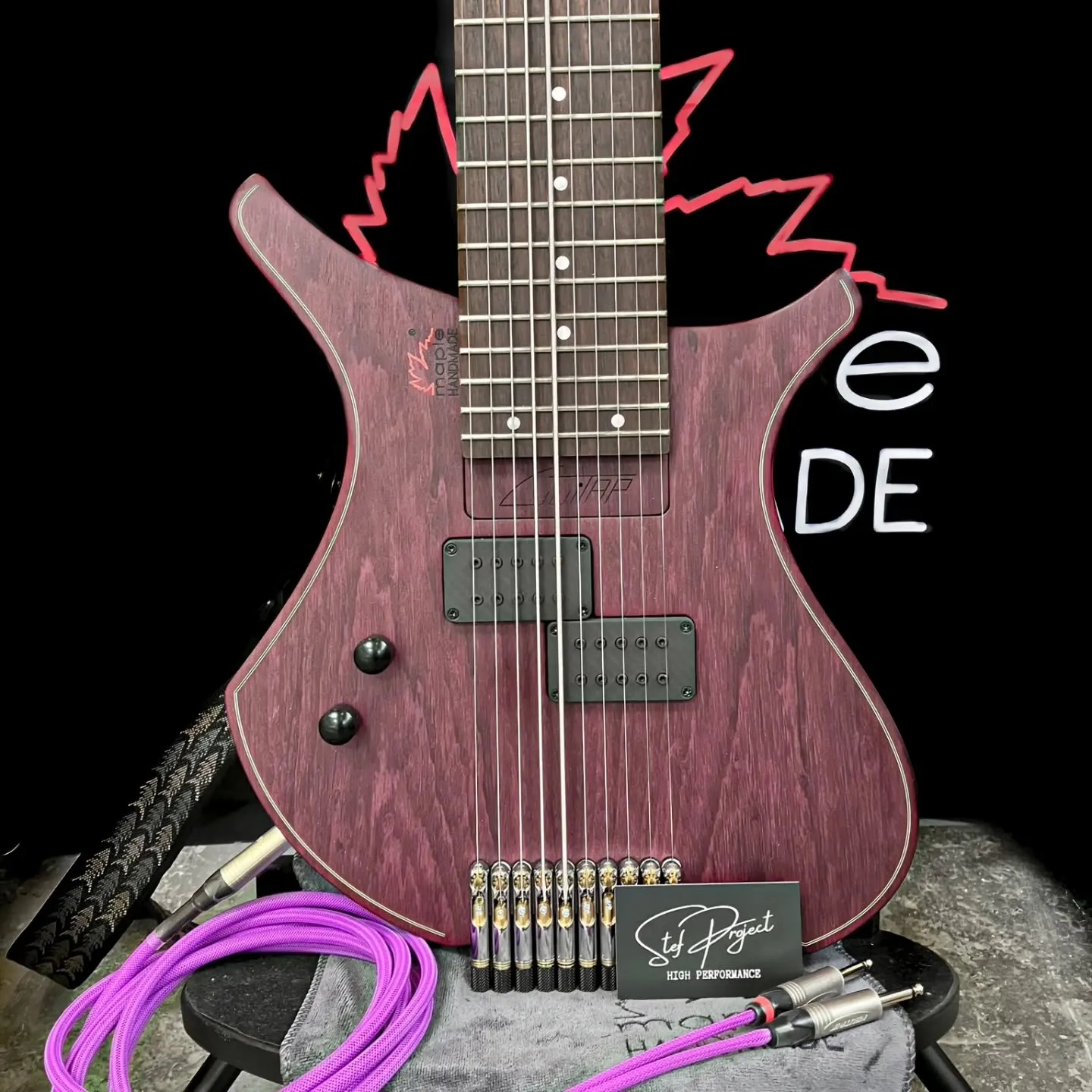
Guitap
Ten strings, two hands, one instrument: bass, accompaniment and melody played together, with no overdubs.
Where it comes from
The idea of the Guitap took shape around 2010, but its roots go back much further. In 1998, during a stay in London, I came across an instrument that profoundly changed the way I thought about music. From that moment on came a long stretch of study, experimentation and research, driven by a strong passion for two-handed tapping.
Over the years I realised how hard it was to find instruments suited to this technique and, above all, how little of a community there was around it. That is where the Guitap came from: not just a new instrument, but a wider project meant to share a language, a vision and a space where a new generation of players can grow.
What two-handed tapping is
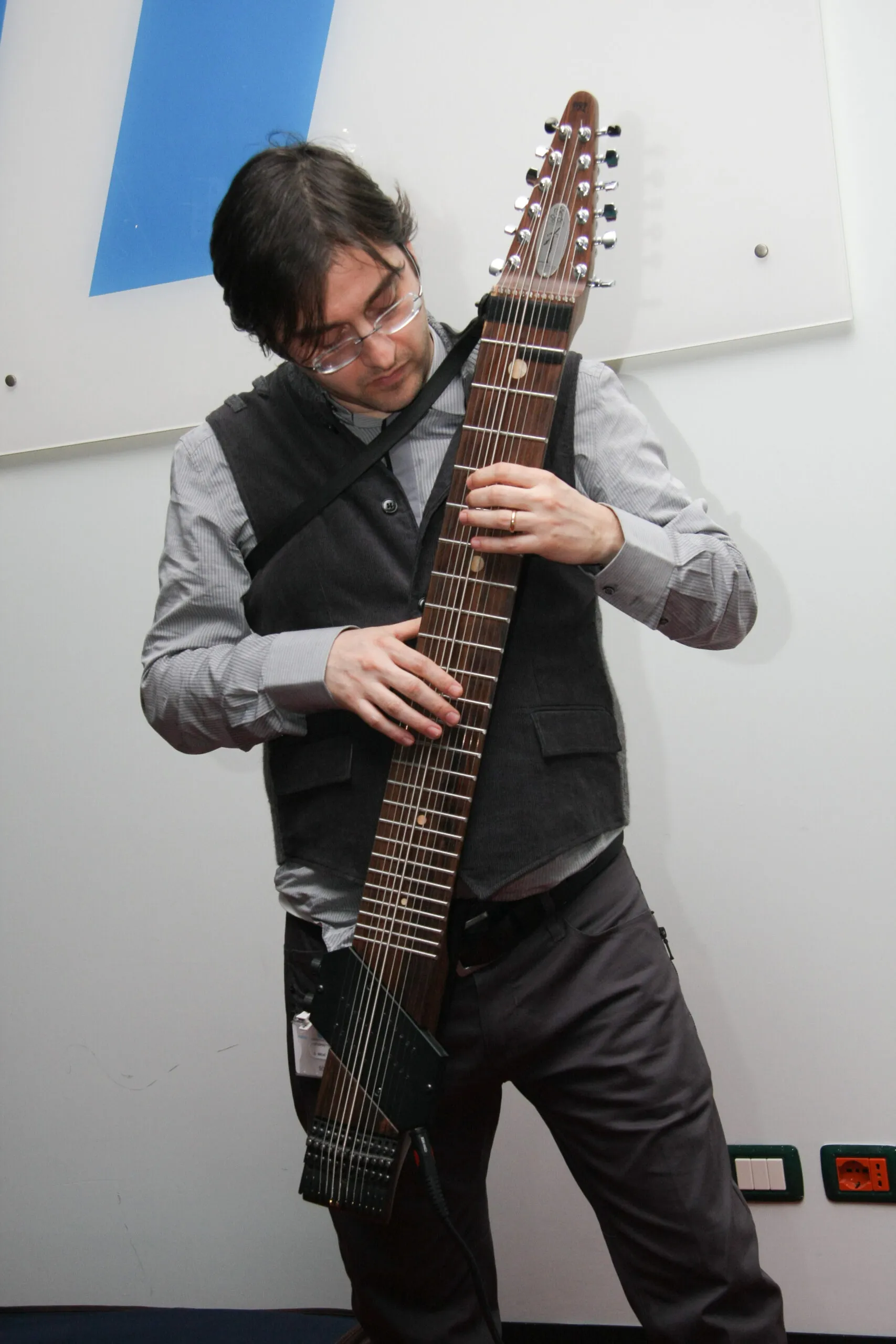
In two-handed tapping the strings are not plucked: they are pressed directly onto the fretboard with the fingers of both hands. One player can therefore hold a bass line, a harmonic accompaniment and a melody together, the way a pianist would — but with the timbre and vibrato of a string instrument.
The technique asks for an instrument built for it: different string tensions between the low and high registers, a low and even action across the whole neck, and a pickup system able to separate the two halves of the instrument. It can be done on an ordinary guitar, but you fight the instrument in every bar.
How it is built
The Guitap grew out of my ideas meeting the craft of luthier Enzo Pascariello — maple HANDMADE Guitars. Each instrument is built by hand.
Video coming soon
A performance video belongs here: it is the content that makes this instrument instantly understandable.
Let’s work together
Have a film, a documentary or a project that needs music?
Send me a couple of lines about the project and your timeline. I usually reply within two working days, with a first idea of how I would approach it.